What's the Difference Between a Hidden Camera and a Security Camera?
Hidden cameras and security cameras serve fundamentally different purposes: a security camera is a visible, overt deterrent designed to discourage would-be intruders, while a hidden camera is a covert monitoring device intended to capture footage without the subject's awareness. Neither is inherently superior — the right choice depends entirely on what you're trying to achieve and the legal context in which you're operating.
Overt vs. Covert: The Core Distinction
The most straightforward way to understand the difference between a hidden camera and a security camera is to think about visibility as a design intention.
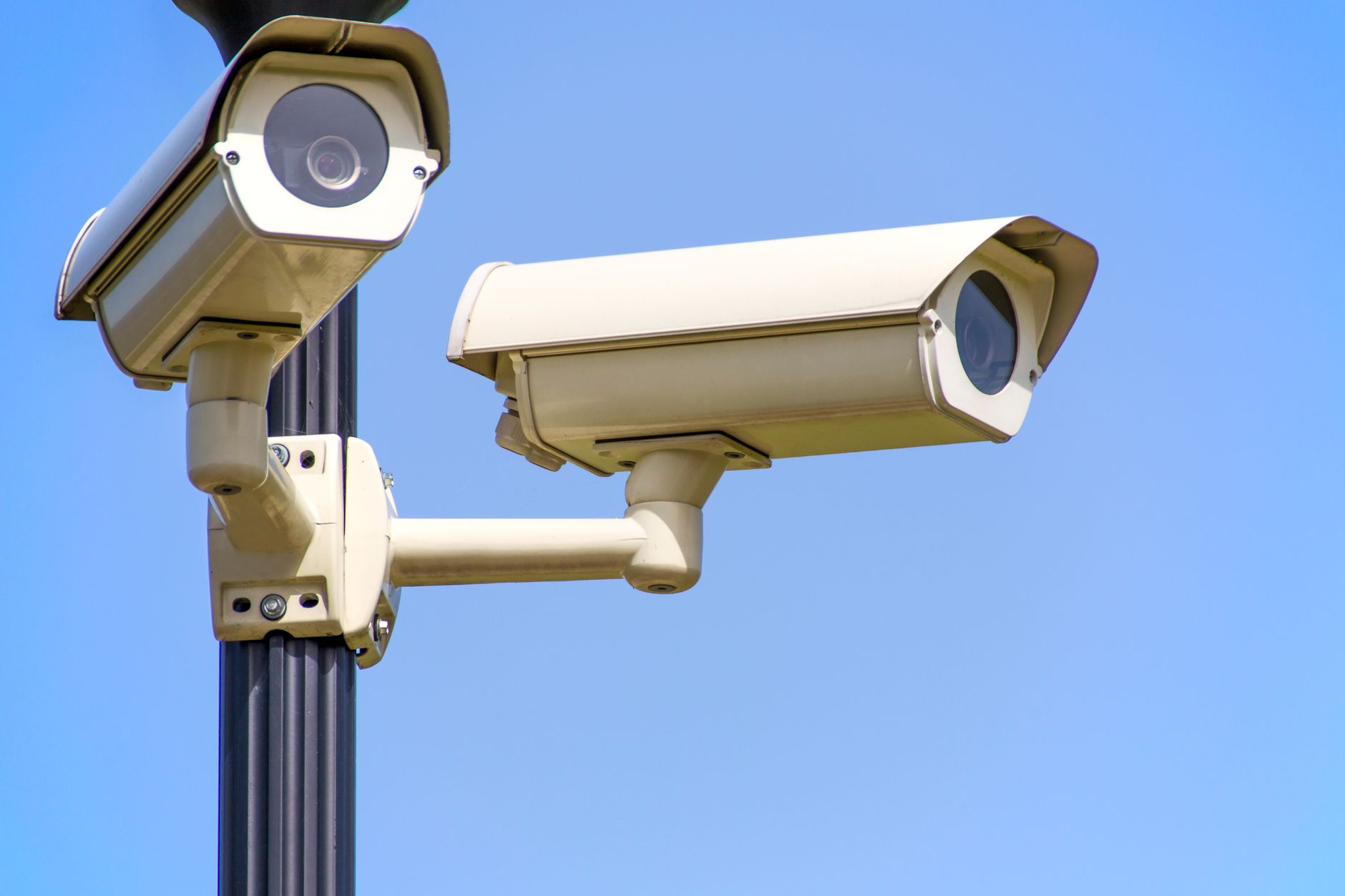
A traditional security camera — the kind you see mounted on the corner of a shop, above a car park entrance, or at a bank — is built to be noticed. The dome housing, the visible lens housing, the blinking LED indicator light: these are all deliberate features. The camera is announcing its presence. Research consistently shows that visible cameras reduce opportunistic crime by making potential offenders aware they are being watched and recorded.
A hidden camera, by contrast, is engineered to be invisible or disguised. It may be embedded inside a clock, a smoke detector, a USB charger, a picture frame, or even a houseplant. The lens aperture is typically no larger than a pinhole. There are no indicator lights, no obvious housing, and no deterrent signal whatsoever. The objective is observation, not prevention through fear of detection.
This single difference — overt presence versus covert concealment — drives nearly every practical trade-off between the two types.
When Visible Security Cameras Are the Right Choice
Visible cameras excel in situations where deterrence is the primary goal. Consider the following common use cases:
Commercial premises and retail environments. A shop owner who wants to reduce shoplifting benefits most from cameras that shoppers can clearly see. The psychological effect of visible surveillance is a proven crime-reduction tool. Post-incident review is a secondary benefit.
Building entrances, car parks, and communal areas. Surveillance in shared spaces works better when residents, visitors, and potential intruders know the area is monitored. This also reduces liability concerns around privacy, since anyone entering the space has implicit awareness they may be recorded.
Employee and public safety compliance. Workplaces that use cameras for health and safety monitoring — watching over warehouse floor operations or construction sites, for example — generally need to inform employees. Visible cameras satisfy this transparency requirement naturally.
Insurance and legal documentation. Insurers typically require evidence that a monitored premise has adequate security infrastructure. A visible camera system with a digital video recorder (DVR) provides an auditable record that covert devices alone cannot.
In each of these cases, the camera's value is maximised when people know it exists.
When a Hidden Camera Makes More Sense
Covert cameras become relevant when deterrence is either impossible or counterproductive, and when the objective is documentation rather than prevention.
Monitoring caregivers in domestic settings. Families who are concerned about the treatment of elderly relatives or young children in their care sometimes use concealed cameras inside their own homes. In many jurisdictions, recording inside your own property with a concealed device is legal provided you are not recording in areas with a reasonable expectation of complete privacy, such as bathrooms or bedrooms.
Internal theft investigation. A business that suspects a specific employee of theft may wish to document the behaviour covertly before taking disciplinary action. Once an individual knows they are being recorded, the behaviour in question tends to stop immediately — which prevents documentation but does not address the underlying problem.
Remote property monitoring without alerting intruders. In some scenarios — a vacant holiday home, a storage facility, a remote cabin — an obvious camera might be the first thing a determined intruder disables or steals. A well-concealed mini hidden cameras setup can continue recording even after a standard camera has been removed.
Personal security and evidence gathering. Individuals who believe they are being targeted for harassment or theft within their own space may use covert devices to document incidents.
Key Technical Differences to Understand
Beyond the visible/concealed distinction, hidden cameras and traditional security cameras differ in several practical ways:
Resolution and field of view. Full-sized security cameras typically offer higher resolution sensors and wider lens options. Miniaturised hidden cameras have improved dramatically in recent years, with many now offering 1080p or even 4K recording, but the small physical size still imposes optical limits.
Power and storage. Security cameras are almost always mains-powered with wired or wireless data transmission to a central recorder. Hidden cameras often rely on battery power and local microSD storage, which means they have finite recording capacity and require periodic maintenance.
Night vision. Infrared night vision requires visible IR LEDs or illuminators, which can compromise concealment. Some hidden cameras use low-lux sensors that work in near-darkness without emitting visible light, though this typically reduces image quality.
Motion detection and alerts. Modern cameras of both types commonly include motion-triggered recording and smartphone alerts. However, integrated systems with professional monitoring are almost always built around overt security cameras rather than standalone hidden devices.
Legal Considerations You Cannot Ignore
The legal framework around hidden cameras varies significantly by jurisdiction, and it is not uniformly permissive. There are several principles that apply broadly:
Recording in areas where people have a reasonable expectation of privacy — bathrooms, changing rooms, hotel rooms — is illegal in virtually every jurisdiction, regardless of whether you own the space.
Recording employees in a workplace without disclosure may violate employment law even where it would otherwise be legal in a residential context.
Audio recording is often subject to stricter rules than video recording. Many jurisdictions require all-party consent for audio capture, meaning a device that records both video and audio may require consent even when a video-only device would not.
Using hidden cameras in rented accommodation, whether as a landlord or a tenant, is typically illegal without the other party's explicit knowledge and consent.
Before deploying any covert monitoring device, verify the applicable law in your specific location.
FAQ
Can a hidden camera be used as a replacement for a security camera system? Not typically. Hidden cameras are best used as a complement to overt security infrastructure, not a replacement. They lack the deterrent effect of visible cameras and generally have more limited storage and power. A home with only covert cameras has no visible deterrent, which means it provides no preventive benefit — incidents may be documented, but not prevented.
How do I know if a hidden camera is recording me without my consent? Common detection methods include using a radiofrequency (RF) detector to identify wireless transmissions from active cameras, using a lens-reflection detector (often called an "anti-spy" detector or lens finder) to spot camera apertures, and systematically inspecting unusual objects in a space for misaligned or oddly placed items that could conceal a lens. No method is 100% reliable, but RF and lens detectors together cover the majority of consumer-grade devices.
Are there cameras that can function as both visible and hidden depending on placement? Yes. Some compact cameras are designed to be mountable openly or concealed inside an object depending on the user's needs. These are sometimes called "tactical" or "dual-use" cameras. However, a camera visible in one context is not automatically appropriate for covert use — the legal and ethical constraints still apply based on where and how it is deployed.