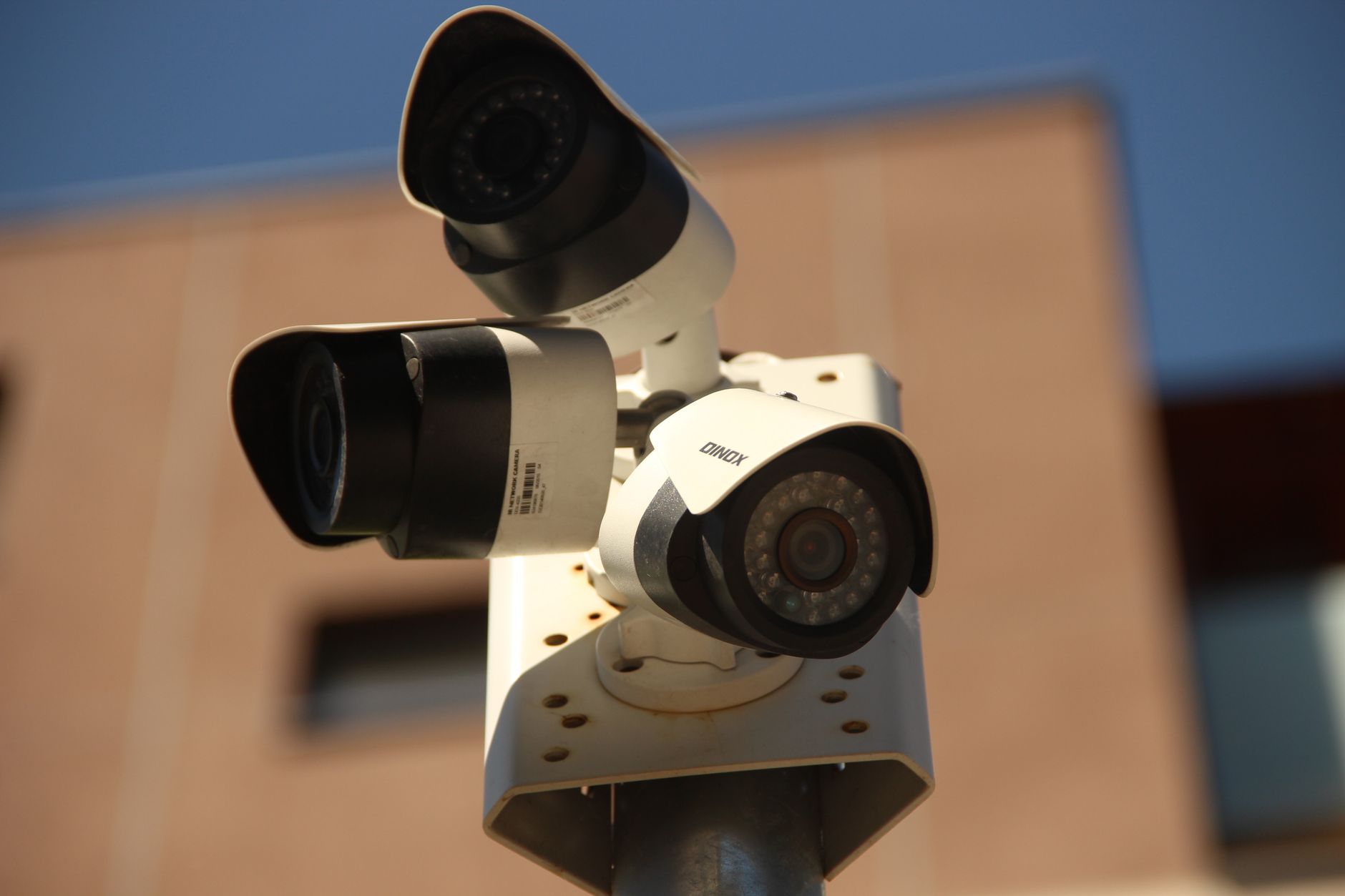
Do Hidden Cameras Record Audio, and Is That Legal?
Most hidden cameras can record audio, but whether doing so is legal is a completely separate question from the video side. In most jurisdictions, recording audio without the knowledge or consent of at least one party in the conversation — and in many places, all parties — is a criminal offence, even if the location is your own property. Understanding the distinction between video surveillance and audio recording laws is essential before you deploy any recording device.
The Difference Between Video and Audio Recording Laws
Video surveillance and audio recording are regulated by entirely different legal frameworks in most countries, and it is a common mistake to treat them as the same.
Silent video recording in areas where people have a reduced expectation of privacy — such as a home entryway, a retail shop floor, or a parking garage — is generally permitted with appropriate notice in most jurisdictions. The same device recording audio, however, triggers wiretapping and eavesdropping statutes that carry significantly heavier penalties.
The key principle is consent:
- One-party consent jurisdictions allow a recording if at least one person present in the conversation knows and agrees to the recording — typically the person holding the device.
- Two-party (all-party) consent jurisdictions require every person in the conversation to consent before audio is captured. Recording without that consent, even in your own home, may constitute a criminal wiretapping offence.
In the United States, federal law (the Electronic Communications Privacy Act) operates on a one-party consent basis, but roughly a dozen states — including California, Florida, and Washington — impose all-party consent rules. Canada, Australia, and the United Kingdom have their own frameworks, and the rules within each country can vary by region or context.
How to Find Out Which Rule Applies to You
Because the laws differ so widely, there is no single global answer. Here is how to determine the applicable rule in your situation:
- Identify your jurisdiction. Audio recording law is often set at the state or provincial level, not just the national level. A recording that is legal in one US state may be a crime two states over.
- Consider the location. Private spaces (a bedroom, a bathroom) carry the highest expectation of privacy and face the strictest scrutiny. Semi-public or commercial spaces (a retail counter, a shared office) may have slightly different treatment, but audio recording there still requires clear disclosure in many places.
- Assess whether the recording will be secret. Open-and-disclosed recording — a clearly visible camera with a notice stating that audio and video are captured — is treated more leniently than covert recording in most legal frameworks.
- Consult a local solicitor or attorney if you have a real deployment in mind. The penalties for unlawful audio interception can include custodial sentences, making professional advice worth the cost.
Common Legitimate Uses That Navigate Audio Law Correctly
Despite the restrictions, there are several scenarios where audio-capable recording devices are deployed lawfully every day:
- Personal safety documentation. Journalists, investigators, and individuals documenting harassment often rely on one-party consent rules, recording conversations they are personally part of.
- Security for owned premises with disclosed recording. Businesses that post clear and conspicuous notices stating that premises are under audio and video surveillance can generally record within their own space.
- Body-worn devices for personal protection. A person wearing a device to document interactions they are involved in typically satisfies one-party consent requirements.
- Parental monitoring of minors. Many jurisdictions provide explicit carve-outs allowing parents to monitor minor children, though the specifics vary.
For personal documentation use cases, a discreet audio + video recording pen is a common tool — designed for situations where the user is a participant in the conversation they are capturing, which generally satisfies one-party consent requirements.
What "Do Hidden Cameras Record Audio" Actually Means Technically
From a hardware standpoint, a camera either has a built-in microphone or it does not. Many budget IP cameras and CCTV systems are video-only; they ship without a microphone entirely, which removes the audio consent question.
Higher-end devices and purpose-built covert recording tools typically include a microphone. Whether that microphone is enabled by default varies by product and firmware. In some cases, audio capture is on by default; in others, it must be activated in the settings.
Key technical points:
- Disabling audio at the device or software level does not guarantee the microphone is inactive. On networked cameras, firmware and cloud settings matter as much as the physical hardware.
- Storage implications differ. Audio adds to file size and may affect retention windows if you are using cloud storage with a data cap.
- Some regions mandate that audio recording be technically impossible (not merely turned off) for cameras sold commercially — manufacturers selling into those markets typically ship audio-stripped variants.
Penalties for Unlawful Audio Recording
The consequences of getting this wrong are serious enough to deserve their own section. In jurisdictions with strict wiretapping laws, unlawful audio interception can result in:
- Criminal charges carrying fines and imprisonment (federal wiretapping in the US carries up to five years per offence)
- Civil liability — the recorded party can sue for damages
- Evidence exclusion — any recordings obtained unlawfully are typically inadmissible in court and may undermine a legitimate legal case you were trying to build
Installing a camera on someone else's property without permission compounds the issue by adding trespass and illegal surveillance charges on top of the audio offence.
FAQ
Q: Can I record audio in my own home without telling visitors? In a one-party consent jurisdiction, you generally can because you are a party to the conversation. In an all-party consent jurisdiction, doing so covertly may constitute wiretapping even in your own home. The safest practice, regardless of jurisdiction, is to post clear notice that audio and video recording is in use on the premises.
Q: Does turning off the audio function in my camera's app make the recording legal? Disabling audio in software is a practical step, but legal compliance is not purely a technical matter — it depends on whether the microphone can still capture data at the firmware or network level. If legal compliance is the goal, choosing a device that is physically audio-incapable, or using a video-only camera, is the cleaner approach.
Q: Are recording pens and wearable recording devices treated differently than fixed cameras? In most jurisdictions the device form factor is irrelevant — what matters is whether audio is being captured, whether consent requirements are met, and the context in which the recording occurs. A wearable recorder used by a participant in a conversation typically benefits from one-party consent rules in the same way a held phone would.